How Does Mouth to Mouth Resuscitation Work? The Science Behind Rescue Breathing
There is a persistent assumption that exhaled air is spent air, stripped of anything useful, and that breathing into someone else’s lungs is closer to symbolism than medicine. That assumption is wrong, and understanding why it is wrong tends to make people far more willing to act. Anyone asking how does mouth to mouth resuscitation work is really asking two separate questions: whether the technique is physiologically sound, and when it is the right response to reach for.
Both have clear answers.
The Oxygen Math That Makes It Work
Room air is roughly 21 percent oxygen. Your body does not extract anywhere near all of it during a single breath cycle. Exhaled air still contains somewhere in the range of 16 to 17 percent oxygen, which is a meaningful fraction of what the atmosphere provides.
That remaining concentration is sufficient to maintain oxygen saturation in a patient who is not breathing, at least for the window that matters before advanced help arrives. Rescue breathing is not a full substitute for a functioning respiratory system. It is a bridge, and the bridge holds long enough to be worth building.
The exhaled air also contains elevated carbon dioxide, which has no therapeutic benefit here but does not negate the oxygen delivery either.
The Mechanics: Airway, Seal, Volume
Three things have to happen in sequence, and skipping any of them makes the effort largely useless.
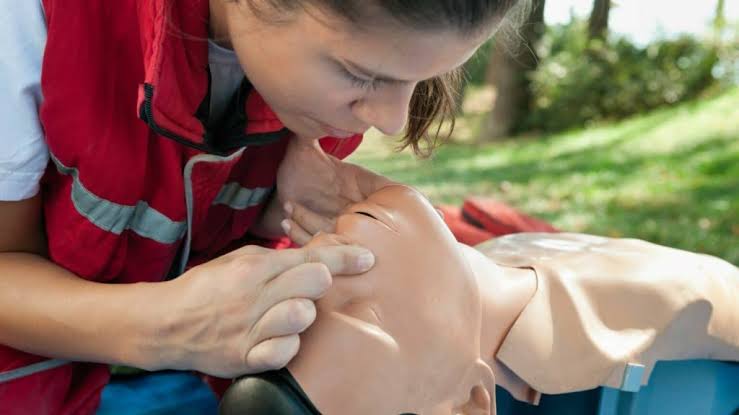
Open the airway. In an unresponsive person, the tongue relaxes and can obstruct the throat. The head-tilt, chin-lift maneuver moves it clear. Without this step, air delivered at the mouth simply will not reach the lungs, and a substantial share of ineffective attempts fail right here.
Create a seal. Pinch the nose closed and form a complete seal over the mouth. Any gap means air escapes rather than entering the chest.
Deliver an appropriate volume. This is where people overcorrect. Each breath should last about one second and should be just large enough to produce visible chest rise. Forceful, oversized breaths raise pressure in the chest, which reduces blood return to the heart and makes compressions less effective. Excess air can also enter the stomach and provoke vomiting. Gentle and adequate beats forceful and enthusiastic every time.
When Rescue Breaths Are Actually Needed
Certain situations make breaths considerably more important than others.
Drowning is the clearest example. The underlying problem is oxygen deprivation rather than a sudden cardiac event, so restoring oxygen is central to the response. The same logic applies to drug overdoses that suppress breathing, choking that has progressed to unresponsiveness, and most pediatric arrests, which are more commonly respiratory in origin than cardiac.
There is also the scenario where a person has a pulse but is not breathing adequately. Compressions are not indicated for someone with a functioning circulation. Rescue breathing alone is the appropriate response, and recognizing that distinction is a genuinely valuable skill.
When Compressions Alone Are the Better Choice
For an adult who collapses suddenly with a suspected cardiac cause, compression-only CPR from an untrained bystander is recommended. The blood is still reasonably oxygenated in the first minutes, and the priority is circulating it. Pausing to attempt breaths you have not been trained to deliver costs compression time, which is the variable most closely tied to survival.
This is not a contradiction of the guidance above. It is a recognition that the correct response depends on the cause and on the responder’s training.
Common Errors That Reduce Effectiveness
Failing to reopen the airway before each breath is the most frequent. The head position shifts during compressions and needs to be reestablished.
Breathing too hard or too long is the second. Watch for chest rise and stop there.
Taking too long between compression cycles is the third. Two breaths should take roughly five seconds total. Interruptions beyond ten seconds meaningfully reduce the odds of a good outcome.
Barrier Devices and Hesitation
Reluctance about direct mouth contact is understandable and is one reason compression-only guidance exists for untrained responders. A pocket mask or face shield resolves the concern entirely, costs very little, and fits in a glove compartment or gym bag. Anyone in a role where they might respond to an emergency should own one.
Learning the Skill Properly
Reading about airway positioning and breath volume builds understanding. Performing them under supervision builds the muscle memory that shows up under stress, and that gap is not something an article can close.
If you want to develop these skills properly, Simple CPR offers training that covers rescue breathing, compressions, and the judgment calls that determine which one a given situation requires. Visit the site to find a course that fits your schedule and your role.