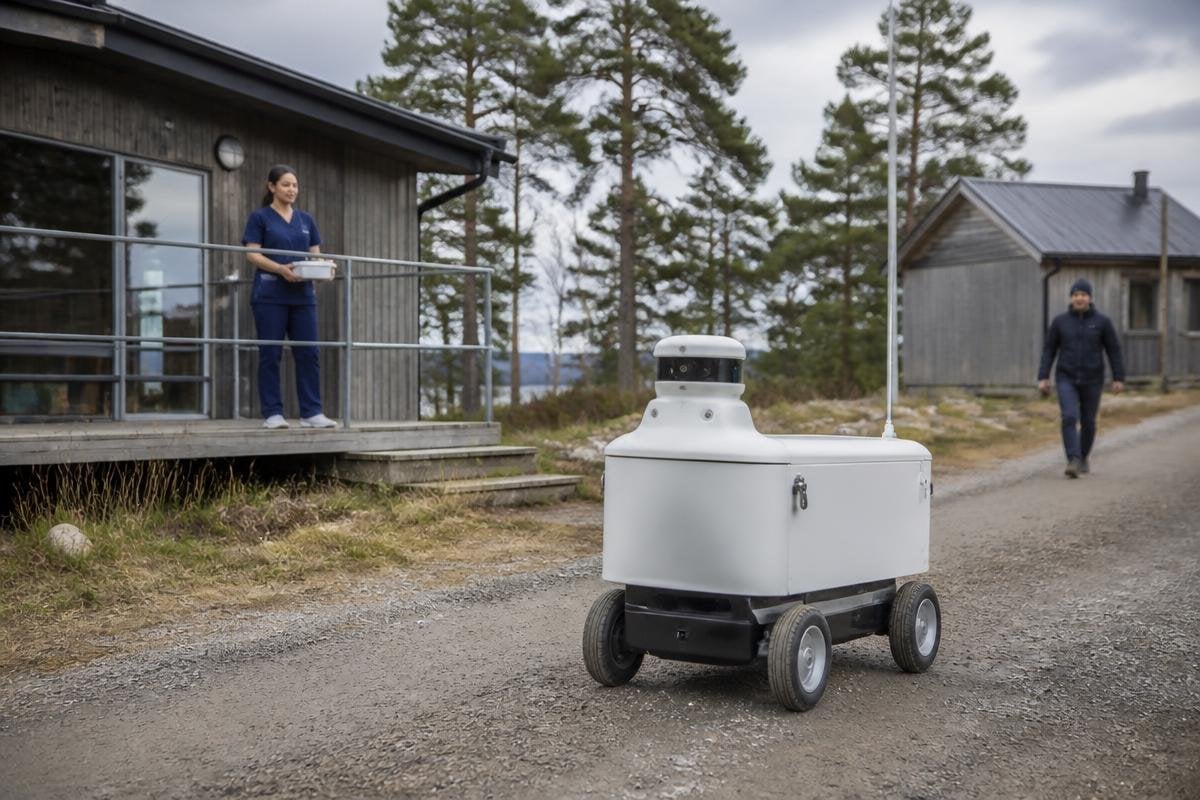
A care robot in a remote community may spend more time carrying supplies than speaking to patients. That sounds modest, but moving medicine, samples, food, or tools can free a nurse for work that needs a person.
- Robots could carry items between a clinic, storage room, and nearby homes.
- Remote links could let a clinician check a robot’s camera or task from another location.
- Care decisions, consent, and emergencies still need local people.
Start with the trip, not the robot
The first question is practical: what care task takes time because someone must travel? A mobile robot could move a sealed medicine box between buildings, carry a diagnostic sample to a collection point, or bring basic equipment to a patient’s home.
That task needs a clear route and a clear handoff. The robot would need to know where to go, avoid people and animals, stop for obstacles, and show that the package reached the right place. A human would still set the rules for storage, timing, and delivery.
A small ground robot may suit a settlement with roads, paths, or packed earth. A drone could cover a gap that has no usable road, but weather, battery charging, landing space, and flight rules would decide if that plan works. The right machine depends on the trip.
Remote care needs a person at each end
A camera and a two-way audio link could let a doctor or nurse check a patient without making the full trip. The machine could move through a clinic, position a camera, or carry a tablet to a bedside. Those actions may help when a local worker needs advice from a clinician elsewhere.
The link itself needs a backup plan. A weak network could freeze video or delay speech, so the local worker needs a safe way to continue the visit. The robot also needs a physical stop button, a charged battery, and a person who can reach it when the remote operator cannot.
A remote clinic may need a telepresence robot for video visits, while a delivery robot may carry medicine between buildings. Those jobs need separate records of the machine, site, operator, and failure case; Robot 24 can put those details beside each claim. The next section looks at limits local staff must handle.
The hard limits are local
It cannot replace a nurse who understands a patient’s condition, family, language, or consent. It also cannot repair a damaged wheel, replace a network, or decide that a medicine is safe for a particular person unless trained staff remain responsible for that decision.
Privacy adds another boundary. Cameras and microphones may collect health information inside homes and clinics. Any project would need rules for who can view the data, where recordings are stored, and when the sensors turn off.
Weather and terrain matter too. Rain can affect cameras and traction. Dust can reach moving parts. A steep path can turn a simple delivery into a recovery job.
A machine that works in a test area may need a different body, sensor setup, or route in a remote settlement.
The strongest opposing view is that a vehicle, radio, or local courier may solve the same task at lower cost. That view deserves a real comparison. I’d start with the cheapest system that meets the care need, then test a robot only where it removes a repeated trip or adds a service people cannot otherwise reach.
A check before buying hardware
A health team can use this list before choosing a machine:
- Name the task and the person who owns its result.
- Measure the route, terrain, weather, network, and charging points.
- Set the handoff rule for medicine, samples, or patient equipment.
- Keep a local worker responsible for care decisions and emergencies.
- Test privacy, remote access, manual control, and physical stopping.
That process also gives the project a fair test. Count completed trips, missed handoffs, operator time, repairs, and cases where a person had to take over. A robot that saves travel but creates daily recovery work may leave the care team with a different burden.
The next useful step is a small pilot around one repeated trip, with local staff setting the rules and a fixed end date for review. If the machine cannot complete that route safely and with less human travel, the community has its answer without paying for a larger system.