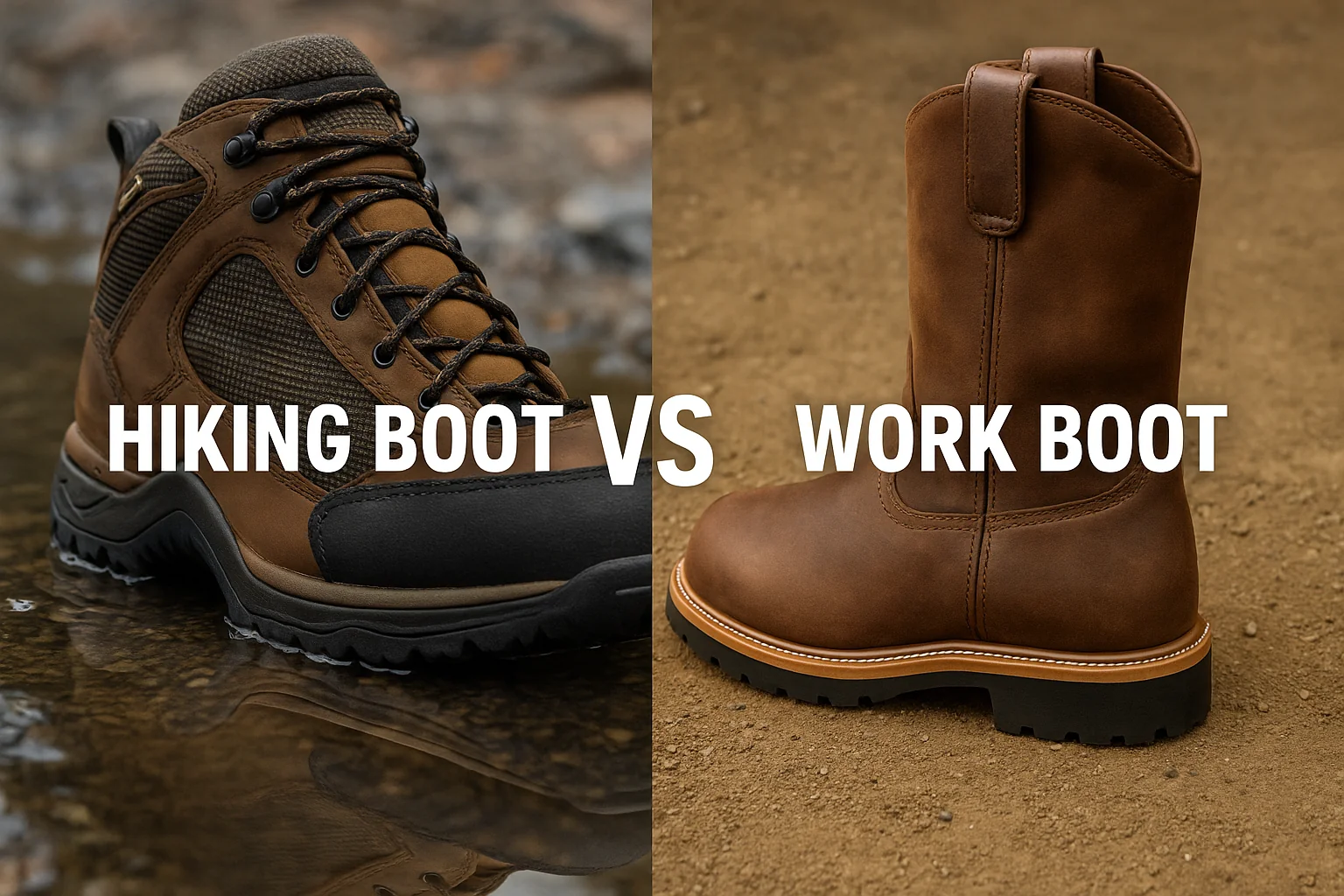
Choosing the right footwear depends heavily on how and where you plan to use it. While hiking boots and work boots may look similar at first glance, they are designed for very different purposes. One focuses on outdoor movement, flexibility, and trail comfort, while the other prioritizes protection, durability, and support in demanding work environments.
Understanding hiking boots vs work boots can help you choose footwear that matches your daily activities. Whether you spend your time exploring trails, working on job sites, handling outdoor tasks, or standing for long hours, selecting the right boot can improve comfort and performance.
What Is the Difference Between Hiking Boots and Work Boots?
The main difference between hiking boots and work boots comes down to their intended purpose.
Hiking boots are designed for outdoor travel across natural terrain. They focus on:
- Flexibility
- Traction
- Lightweight construction
- Walking comfort
- Weather protection
Work boots are designed for job environments where protection and durability are priorities. They often include features such as:
- Reinforced toe protection
- Slip-resistant soles
- Heavy-duty materials
- Strong construction
- Support for long workdays
While both types of boots may offer traction and ankle support, their construction reflects different needs. (nortiv8.com)
Hiking Boots: Built for Outdoor Movement
Hiking boots are designed for people who spend time walking across trails, uneven ground, and outdoor landscapes.
Their construction focuses on helping users move comfortably over changing terrain.
Key Features of Hiking Boots
Lightweight Construction
Hiking often involves covering long distances, so weight matters. Hiking boots are generally designed to reduce fatigue during extended walking.
Lighter materials can make it easier to:
- Walk longer distances
- Move quickly across trails
- Reduce strain on the feet
Flexible Design
Hiking boots are usually more flexible than traditional work boots. This allows the foot to move naturally while navigating rocks, roots, slopes, and uneven surfaces.
Flexibility is especially useful when:
- Climbing inclines
- Walking downhill
- Adjusting to uneven terrain
Trail-Focused Traction
Hiking boots typically use lug patterns designed for outdoor surfaces. These soles help provide grip on:
- Dirt trails
- Rocks
- Mud
- Loose ground
The traction design supports movement across natural terrain where surfaces can change frequently. (nicksboots.com)
Weather Protection
Many hiking boots include water-resistant or waterproof materials to help protect feet during outdoor activities.
Common features include:
- Waterproof membranes
- Treated leather
- Breathable materials
- Moisture management
These features are useful for hikers dealing with changing weather conditions.
Work Boots: Built for Protection and Durability
Work boots are designed for environments where feet may face hazards, heavy materials, and demanding conditions.
Industries that commonly use work boots include:
- Construction
- Manufacturing
- Warehousing
- Landscaping
- Maintenance
- Transportation
Key Features of Work Boots
Protective Toe Options
Many work boots include protective toe designs to reduce injury risks in workplaces where falling objects or compression hazards are possible.
Common options include:
- Steel toe
- Composite toe
- Alloy toe
The right choice depends on workplace requirements.
Durable Materials
Work boots often use heavier materials designed to withstand daily wear.
Common materials include:
- Full-grain leather
- Reinforced stitching
- Heavy-duty rubber soles
This construction helps work boots handle tough environments where lighter footwear may wear out faster.
Slip-Resistant Soles
Many workplaces involve surfaces that may be slippery due to:
- Oil
- Water
- Dust
- Industrial materials
Slip-resistant outsoles help provide better grip during work activities.
Support for Long Hours
Workers often spend eight or more hours standing or walking. Work boots are designed to provide stability and support throughout extended shifts.
Features may include:
- Cushioned insoles
- Arch support
- Shock absorption
- Supportive midsoles
Hiking Boots vs Work Boots: Side-by-Side Comparison
| Feature | Hiking Boots | Work Boots |
| Main Purpose | Outdoor trails and walking | Job sites and industrial work |
| Weight | Usually lighter | Usually heavier |
| Flexibility | More flexible | More structured |
| Protection | Focuses on terrain protection | Focuses on workplace safety |
| Toe Protection | Usually no safety toe | Often available |
| Sole Design | Trail-focused traction | Work surface traction |
| Comfort Style | Designed for distance walking | Designed for long work shifts |
| Materials | Leather, synthetic materials, mesh | Heavy leather and reinforced materials |
Can You Use Hiking Boots as Work Boots?
Hiking boots can work for light outdoor tasks, but they may not provide the protection needed for demanding job environments.
They may be suitable for:
- Gardening
- Light maintenance
- Outdoor walking jobs
- Casual outdoor activities
However, they may not be appropriate where safety features are required, such as construction sites or industrial workplaces.
If your job requires protective footwear, a dedicated work boot is usually the better choice.
Can You Use Work Boots for Hiking?
Work boots can be used for occasional hikes, but they may not offer the same comfort and flexibility as hiking boots.
Potential challenges include:
Added Weight
Heavy work boots can increase fatigue during long hikes.
Reduced Flexibility
The rigid construction that provides workplace protection may feel less comfortable when walking across uneven trails.
Different Sole Design
Work boot soles are built for job environments, while hiking boot soles are designed specifically for trail conditions.
For short outdoor walks, work boots may be acceptable. For regular hiking, footwear designed for trails is generally more comfortable.
Which Boots Are Better for Standing All Day?
Both hiking boots and work boots can provide comfort for long periods, but the better choice depends on the environment.
Choose Work Boots If You:
- Work on hard surfaces
- Need safety features
- Handle heavy equipment
- Work in construction or industrial settings
Choose Hiking Boots If You:
- Walk long distances
- Spend time outdoors
- Need lighter footwear
- Move across uneven terrain
The best boot is the one that matches your daily activities.
Factors to Consider Before Buying
Your Main Activity
Start by identifying where you will use the boots most.
Ask:
- Am I walking trails or working on a job site?
- Do I need protective features?
- Will I wear them for several hours daily?
- What type of surfaces will I encounter?
Fit and Comfort
Regardless of the boot type, proper fit is essential.
A good boot should provide:
- Enough toe room
- Secure heel placement
- Comfortable arch support
- No painful pressure points
Material Quality
Leather boots often provide durability and can develop a comfortable fit over time. Synthetic options may offer lighter weight and faster break-in periods.
Weather Conditions
Consider your environment.
For wet conditions, look for water-resistant or waterproof options. For hot climates, breathable materials may provide better comfort.
Choosing the Right Boot for Your Lifestyle
The debate between hiking boots vs work boots does not have one universal winner. Each type serves a different purpose.
Hiking boots are better suited for outdoor adventures, trail walking, and activities where flexibility and traction matter most. Work boots are better suited for professional environments where durability, stability, and protection are priorities.
Choosing the correct footwear can help improve comfort, support, and performance during your daily activities.
For those looking for dependable footwear options for work, outdoor activities, and everyday use, BootsPlusMore offers a variety of boots designed for different needs, including work boots, hiking boots, and outdoor footwear.